

I’m excited to share some fascinating insights about the science behind metabolic therapy and its potential benefits for mental health. If you’ve ever struggled with conditions like depression, anxiety, or bipolar disorder, you know how important it is to explore every possible avenue for feeling better.
While traditional treatments like medication and therapy are crucial, there’s an exciting “new” approach that might just add another valuable tool to your mental health toolkit: metabolic therapy.
Before we dive in, let’s keep in mind that I am going to touch on some technical and scientific information. Don’t worry, though—I hope to break it down in a friendly and approachable way.
My goal is to help you understand how taking care of your body’s energy production systems might also boost your mental health. Ready to explore this intriguing connection? Let’s get started!
Understanding Metabolic Therapy
If you google “What is metabolic therapy?”, you will be directed to a series of sites about cancer, seizures, Alzheimer’s Disease, and ALS. In order to learn about metabolic therapy for mental health you have to look up metabolic psychiatry.
Dr. Shebani Sethi of Stanford defines metabolic psychiatry as, “…a new subspecialty focused on targeting and treating metabolic dysfunction to improve mental health outcomes.” So what is metabolic dysfunction? It all starts with the mitochondria.
Mitochondria: The Powerhouse of the Cell

Mitochondria are organelles (one of your cell’s organs) present in large numbers within almost every human cell. They are responsible for producing energy, determining which cells need to die, storing calcium, and producing heat to keep us warm from the inside. We are going to focus on energy production, though it’s role in cell death is also important here.
So how do they produce energy? Cells are like cars with two engines. One engine cuts glucose (sugar) in half creating a little bit of cellular energy called ATP (the fuel all of our cells and their organelles need to operate) then ships the split glucose molecules inside of the mitochondria. The other engine breaks glucose halves all the way down into electrons over a series of chemical reactions creating a lot more ATP.
Improving Cellular Energy Production
Why does this talk of engines and ATP matter? Because by using therapies like the ketogenic diet you can switch your brain’s fuel source from glucose to ketones (which come from fat burning from our bodies or food we eat). Ketones can skip the first engine all together, alleviating some of the pressure on your mitochondria and the cell as a whole. Essentially, ketones are a more efficient fuel for the brain. Research has shown that this can help repair the mitochondria and reduce oxidative stress and inflammation.
The Link Between Metabolism and Mental Health
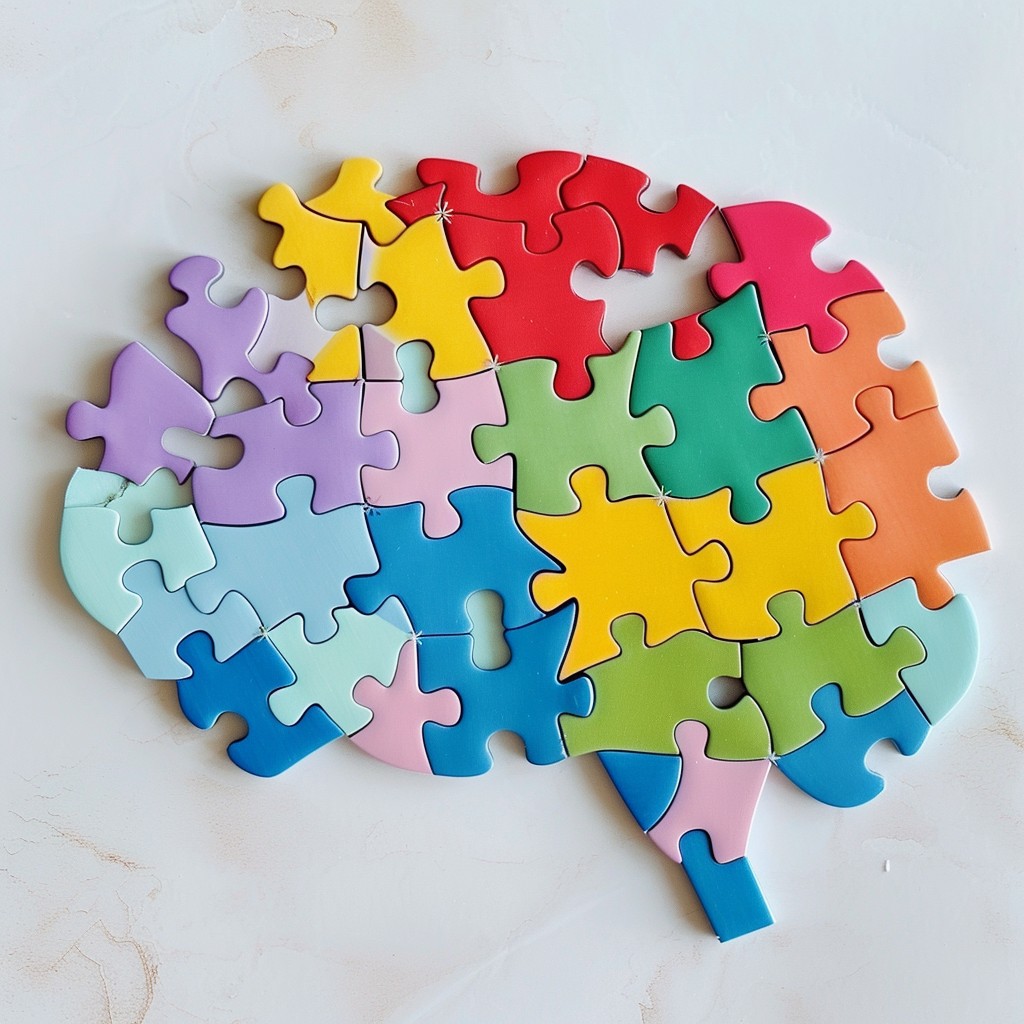
I may have left out a few things that mitochondria can do and activities they participate in that are key to our mental health. You may have heard that an imbalance in neurotransmitters causes mental disorders. Well mitochondria help produce and regulate neurotransmitters such as serotonin, dopamine, and GABA. Still, this is only part of the picture. Mitochondria also help produce hormones and help handle inflammation processes.
It is easy now to see how if our mitochondria are not functioning it can mess up the brain. The brain uses around 20% of the body’s energy even though it only makes up around 2% of the body’s mass. When you think about all the brain does it makes sense. Considering this, it is clear how mitochondrial dysfunction can lead to such “lovely” brain symptoms as mood dysregulation and cognitive decline, among others.
Conclusion
Thank you for joining me on this exciting exploration of the science behind metabolic therapy and its potential benefits for mental health! I hope you found the information both enlightening and empowering. Remember, taking care of your metabolic health could be a fantastic addition to your mental health journey.
If you have any questions or want to share your own experiences, feel free to leave a comment below. I’d love to hear from you! And don’t forget to check back for more tips and insights on living a healthier, happier life.
Until next time, take care!
References
Baumann, O. (2023). How much energy do we expend using our brains?. Bond University. https://bond.edu.au/news/how-much-energy-do-we-expend-using-our-brains#:~:text=Tracing%20oxygen%20consumption%2C%20the%20brain,the%20typical%20smartphone%20requires%20daily.
Ede, G. (2024). Change your diet, change your mind: A powerful plan to improve mood, overcome anxiety, and protect memory for a lifetime of Optimal Mental Health. Balance.
Leggett, H. (2022). 5 questions: Shebani Sethi on the connection between metabolism and mental health. Stanford Health News Center. https://med.stanford.edu/news/all-news/2022/11/metabolic-psychiatry.html
Newman, T. (2023). Mitochondria: Form, function, and disease. Medical News Today. https://www.medicalnewstoday.com/articles/320875
Palmer, C. M. (2022). Brain Energy a revolutionary breakthrough in understanding mental health–and improving treatment for anxiety, depression, OCD, PTSD, and more. BenBella Books, Inc.


 Metabolic & Mental Health
Leave a reply to Ketogenic Diet and Mental Health: A Science-Based Approach – Metabolic & Mental Health Cancel reply